viernes, 8 de abril de 2011

The effects of music on living beings by Esteban Arrieri


The effects of music on living beings


Many people believe that music is part of their lives and they could not imagine life without it. Many of them take music as an entertaiment (like many of us may think it really is), but at the same time they might ignore the effects that it has upon us. And not only on us, but also on any kind of living organism. Music is not only played to entertain people, it is played and it has been played in religious ceremonies and in many aborigine tribes as a way to iniciating youngsters in the daylife and activities of the tribe.

Music can be a very good companion for people in different circumstances, for example it is played at nightclubs where people are having fun at weekends or even in pubs where many people gather after working all day long to relax and drink something. Many people like to listen to music when they are doing the housework. Music plays an important role in their lives. Whatever the kind of music they like, it is something that they have chosen because they like it and it makes them feel good.

Some people who have researched the effects of music on humans, say that it does not only affect human’s mood, but it can also affect their body physically. Music has the power to change their moods, to help them relax after a long stressing day or to make them feel even worse. It has also the power to make them feel angry. In spite of that, the music that people really like has to play an important role, too. Personally, I like some sort of music, but there are times, when I am very tired or I have such a terrible headache that I do not want to listen to any kind of music.

Scientists also claim that music has effects on humans’ organisms. They found that the rhythm of slow classical music can influence the beat of humans hearts and make their blood stream go slower. With fast classical music the influence is the same, it makes their heart beat faster and also changes the speed of the blood stream.

The effects of music on animals have also been researched by some curious people. The most amazing experiment was done by an university student who exposed some mice to classical music 24 hours per day, and took another group of mice and exposed them to heavy metal. The experiment was meant to see what influence music may have on them. He found that those mice which were exposed to classical music had increased their ability to solve mazes, but he had to stop the experiment because the other group of mice (the ones which were exposed to metal music) started killing each other. This means that music has the power to influence not only humans but also animals. On the one hand, there is the classical music power, which helped the mice increase their intelligence. On the other hand, there is the metal music power which led mice to let their beast and angry instinct take control of them and became very violent.

A further point to add here is about experiments on plants. Retallack carried out an experiment which consisted of playing different kinds of music to plants and seeing how they (plants) grow up. The researcher used different kinds of music such as rock and pop, country and jazz. Those plants which were exposed to country and jazz music, grew healthily and very well. But the ones which were exposed to rock, grew tall and in a sad way. These ones died in just a fortnight.

All in all, music is around everything, and it has been around probably since the beginnings of the human race. It may sound strange to talk about the powers of music, but it may be because those powers were ignored until today. Now that experiments have enlightened something about the influence of music it could be a good idea to go on with these experiments. Some of them have shown that music can help people with some diseases, like Autism, and they have also shown that classical music is good to develop memory or increase intelligence, even to relax.
Brooke FraserFrom Wikipedia, the free encyclopedia
(Redirected from Brooke fraser)
Jump to: navigation, search
Brooke Fraser

Background information
Birth name Brooke Gabrielle Fraser
Born 15 December 1983 (1983-12-15) (age 27)
Wellington, New Zealand
Origin Wellington, New Zealand
Genres
Pop
Folk rock

Years active 2002–present
Labels Sony Music
Wood + Bone
Website http://www.brookefraser.com
Brooke Gabrielle Fraser, better known as simply Brooke Fraser born (15 December 1983) is a New Zealand award-winning folk-pop musician. Her third studio album Flags has become the most successful album of her career, with the single "Something in the Water" reaching number one on the RIANZ singles chart in 2010.

Contents
1 Early life
2 Musical career
2.1 What to Do With Daylight
2.2 Albertine
2.3 Flags
3 Personal life
4 Charity work
5 Discography
6 Awards and nominations
7 References
8 External links

[edit] Early lifeFraser is the eldest of the three children born to former All Black, Bernie Fraser[1] and his wife Lynda Fraser.[2] She grew up in Naenae, Lower Hutt and attended Dyer Street School, Naenae Intermediate School and Naenae College.[3]

Fraser took piano lessons between the ages of seven and seventeen. She started writing songs at age twelve and taught herself the acoustic guitar at fifteen, although despite her singing success she has never taken singing lessons.[3]

She performed at Parachute, an annual New Zealand music festival, and did so for several years, beginning in 2000 – including a special guest performance in 2007.[3]

She began writing for the Soul Purpose magazine at age fifteen, and was later made editor in 2002. She gave up her job as editor shortly after moving to Auckland in late 2002 in order to pursue her music career.[4]

[edit] Musical careerIn 2002, while Fraser was in Auckland, Scotty Pearson, the drummer for Elemeno P, organised a meeting with producer Matty J for her. Matty J became her manager, liaising with the major labels who had shown interest and compared their offers. Fraser had about five different labels offer her deals and chose to sign a multi-album deal with Sony Music.[5]

[edit] What to Do With DaylightMain article: What to Do with Daylight
Fraser's first album, What to Do with Daylight, was released in New Zealand in late 2003, debuting at number one and achieved gold status in the same week. The album eventually went seven times platinum,[6] selling over 105,000 copies in New Zealand alone.[7] It remained on the album charts for sixty-six weeks.[8] All five singles from the album reached the top twenty in the New Zealand Singles Chart.[9] Her album also topped the New Zealand Top 50 Albums of 2004.[10]

Following the release of What to Do with Daylight, Fraser toured Australia and New Zealand with American artist John Mayer and then toured New Zealand with veteran U.K. rock artist David Bowie.[11][12] Whilst on tour with John Mayer, she met with his guitarist and keyboardist Michael Chaves who, after recording Mayer's album Heavier Things, Fraser enlisted to play on her album and future concerts.[13]

martes, 5 de abril de 2011

THE PSYCHOLOGY OF MUSIC by Cesia Panama


THE PSYCHOLOGY OF MUSICYOUR OPINION:

WHAT ARE YOUR VIEWS ON THE ARTICLE ABOVE?

DO YOU AGREE WITH THE FINDINGS OF THE STUDIES REGARDING THE PSYCHOLOGY OF MUSIC?

I totally agree with the findings of the researches written on this article. I had previous personal convictions about the reactions produced by some kinds of music. However, some other results of these studies about reactions and behaviours are really surprising to me.

The power of music in the human mind is wonderful: it helps to express emotions that poetry, painting or other types of art do not allow to. Sometimes music produces effects that are desired, such as intelligence or less pain and other times, it produces undesired effects, for example violence and suicide. I think people like different kinds of music depending on the need they unconsciously have, as they are not able to express deep emotions and the only way they find is by music.

However, the findings can also apply, not only to humans, but also to animals
and plants. I agree with those findings, as I knew animals recognize sounds and songs and by some attitudes, we can infer which song they like most. I did not know the relationship between music and plants. Nevertheless, I believe in the research results as I have heard once that children’s voice is healthy for plants, and they vibrate when they “hear” children or some other familiar’s voices. Some people turn on the radio to the plants so that they grow healthier and nicer but we cannot explain how it is produced as plants have no ears. We may be called “unscientific” but it is something true that has no rational explanation.

martes, 22 de marzo de 2011

Musical Talent: Innate or Learned?


Musical Talent: Innate or Learned?
Volume 3 / Issue 1 / Fall 2002


Are children born with an appreciation for music and the ability to demonstrate it? Or do they develop musical ability through early exposure and structured practice? The answer is both, according to Dianna Richardson, graduate of the Juilliard School and the Cleveland Institute of Music. Richardson, who is an artist-in-residence at the Cleveland School of the Arts and a youth instructor at Baldwin-Wallace College, claims that many of her inner-city high school students possess “raw talent.” They have a keen ear for music, can play demonstrated or familiar pieces beautifully, have an extraordinary sense of rhythm, and are well synchronized with their peers when playing their instruments. Most of them, however, lack formal music instruction and cannot read sheet music. In contrast, Richardson’s college students, who have benefited from early structured lessons in reading and understanding music, can play most sheet music with impressive precision but are not as adept at playing together as a group.

The Association for Supervision and Curriculum Development reports that children who are musically gifted show early developmental signs of musical precocity, which may include noticing off-key music, remembering melodies, singing in tune, fondness for playing instruments in preschool, rhythmic ways of moving and speaking, humming to themselves, tapping rhythmically while working, and sensitivity to environmental sounds (waterfalls, rain on the roof, etc.). Researchers recognize such indicators of precocious musical talent as an innate ability to identify pitch (i.e., to imitate pitch with precision), precise rhythmic ability, intense interest in a variety of music, and an ability to learn and express music through rote methods (recognition and imitation). Richardson says that such students in the inner city, where resources may not be readily available, are often identified in religious organizations, where they participate regularly in choirs and are encouraged to express themselves musically.

Although early intervention and instruction are not necessary for developing musical talent, they appear to be significant factors in determining a child’s full realization of a musical gift. Research on child prodigies indicates that exceptional musical abilities are often acquired through optimal environmental conditions. Important contributing factors include self-motivation; extensive support from family members, mentors, and teachers; appropriate resources (instruments, lessons, and exposure to musical activities); and rigorous practice. Parents can facilitate musical development in their children by recognizing how and when to encourage and reinforce skills and concepts that are already developing naturally.

Learning music is much like learning language, because there is a natural progression in development. For example, exposing children from birth to a variety of music in a broad range of tones and pitches will help them acquire the ability to distinguish differences in music, much as infants acquire the ability to distinguish their parents’ native language (dialect) from a foreign language. Then, during ages three to five, when children are developing better smooth-muscle coordination and a sense of rhythm, they should be encouraged to sing along to music and engage in rhythmic activities, such as clapping, swinging, dancing, tapping, marching, and using nonmelodic instruments (rhythm sticks, cymbals, etc.). As the ability to recognize and imitate rhythm develops, during ages four to five, children should be encouraged to accompany singing with melodic instruments (xylophone, autoharp, resonator bells, etc.). Although certain stages in child development are considered sensitive for developing specific musical and spatial abilities, no one blueprint will help your child become a master musician.

Shinichi Suzuki’s method of developing musical ability in young children calls for early education and consistent parental involvement. Outlined in Suzuki’s book Nurtured by Love: The Classic Approach to Talent Education, trans. Waltraud Suzuki, 2d ed. (Warner Brothers, 1983), the theory behind the method prescribes a warm environment that encourages children to become happy, loving, and talented individuals.
—Julie A. Wojcik, M.Ed., NCSP

Julie A. Wojcik is a school psychologist for the Cleveland municipal school district. Her doctoral studies concern the efficacy of programs and interventions for cognitively gifted students.


Frédéric Chopin


Frédéric Chopin

Chopin at 25, by Maria Wodzińska, 1835Frédéric François Chopin (Polish: Fryderyk Franciszek Chopin;[1] 22 February or 1 March 1810[2] – 17 October 1849) was a Polish composer, virtuoso pianist, and music teacher, of French–Polish parentage. He was one of the great masters of Romantic music. He is also known as "The poet of the Piano".

Chopin was born in Żelazowa Wola, a village in the Duchy of Warsaw. A renowned child-prodigy pianist and composer, he grew up in Warsaw and completed his musical education there. Following the Russian suppression of the Polish November 1830 Uprising, he settled in Paris as part of the Polish Great Emigration. He supported himself as a composer and piano teacher, giving few public performances. From 1837 to 1847 he carried on a relationship with the French woman writer George Sand. For most of his life, Chopin suffered from poor health; he died in Paris in 1849 at the age of 39.

All of Chopin's works involve the piano. They are technically demanding but emphasize nuance and expressive depth. Chopin invented the musical form known as the instrumental ballade and made major innovations to the piano sonata, mazurka, waltz, nocturne, polonaise, étude, impromptu and prélude.

Ludwig van Beethoven


Ludwig van Beethoven


A portrait by Joseph Karl Stieler, 1820Ludwig van Beethoven[1] (baptised 17 December 1770[2]–26 March 1827) was a German[3] composer and pianist. The crucial figure in the transition between the Classical and Romantic eras in Western art music, he remains one of the most famous and influential composers of all time.

Born in Bonn, then the capital of the Electorate of Cologne and part of the Holy Roman Empire of the German Nation in present-day Germany, Beethoven moved to Vienna in his early 20s, studying with Joseph Haydn and quickly gaining a reputation as a virtuoso pianist. His hearing began to deteriorate in the late 1790s, yet he continued to compose, conduct, and perform, even after becoming completely deaf.

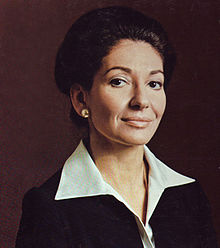
Maria Callas


Maria Callas

Maria Callas (Greek: Μαρία Κάλλας) (December 2, 1923 – September 16, 1977) was an American-born Greek soprano and one of the most renowned opera singers of the 20th century. She combined an impressive bel canto technique, a wide-ranging voice and great dramatic gifts. An extremely versatile singer, her repertoire ranged from classical opera seria to the bel canto operas of Donizetti, Bellini and Rossini; further, to the works of Verdi and Puccini; and, in her early career, to the music dramas of Wagner. Her remarkable musical and dramatic talents led to her being hailed as La Divina.
Born in New York City and raised by an overbearing mother, she received her musical education in Greece and established her career in Italy. Forced to deal with the exigencies of wartime poverty and with myopia that left her nearly blind on stage, she endured struggles and scandal over the course of her career. She turned herself from a heavy woman into a svelte and glamorous one after a mid-career weight loss, which might have contributed to her vocal decline and the premature end of her career. The press exulted in publicizing Callas's allegedly temperamental behaviour, her supposed rivalry with Renata Tebaldi and her love affair with Aristotle Onassis. Her dramatic life and personal tragedy have often overshadowed Callas the artist in the popular press. However, her artistic achievements were such that Leonard Bernstein called her "The Bible of opera";[1] and her influence was so enduring that, in 2006, Opera News wrote of her: "Nearly thirty years after her death, she's still the definition of the diva as artist—and still one of classical music's best-selling vocalists."[2]